



Today’s surgery demands increasingly smaller and more precise surgical instruments, with more complex kinematics and ever tighter functional tolerances In this context, for manufacturers of surgical instruments and surgical robots, MIM technology has evolved from being an interesting option into a strategic enabler: it makes it possible to manufacture intricate geometries with high precision, biocompatibility and mechanical strength, making it ideally suited to medical device applications in endoscopic medicine, particularly for complex and miniaturized components.
Let us examine why MIM has become a benchmark technology for manufacturing geometrically complex medical metal components, and what manufacturers should consider when evaluating this technology within their value chain.
What is MIM (Metal Injection Moulding), and why is it relevant to the medical sector?
Metal Injection Moulding combines the geometric freedom of plastic injection moulding with the mechanical performance of sintered metals. The process begins with a material known as feedstock, which is injected into a mould to obtain a “green part.” The binder is then removed during the debinding stage, after which the part is sintered at high temperature until it achieves the density, microstructure and mechanical properties characteristic of forged or machined metal.
The result is a process capable of producing highly complex shapes —thin walls, internal channels, ribs, recesses and functional teeth— in a single manufacturing step, without requiring additional machining operations on most surfaces. This characteristic, known as near-net-shape manufacturing, is precisely what makes MIM particularly suitable for laparoscopic surgical instruments: an environment where dimensions are small, internal paths are intricate and every available cubic millimetre of space must be used efficiently.
Compared with CNC machining, investment casting or stamping, MIM offers a unique combination of geometric complexity, dimensional repeatability and material efficiency for medium- and high-volume production, something none of these alternatives can achieve simultaneously.
The rise of laparoscopy: an increasingly common reality
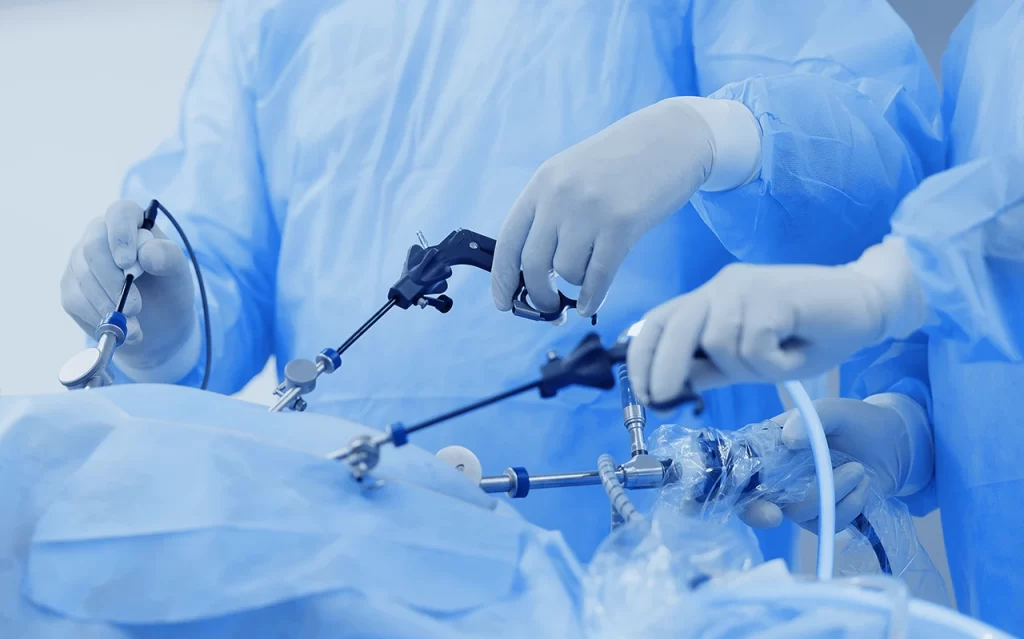 Laparoscopic surgery has become established as an alternative to open surgery because of its clinical advantages: smaller incisions, reduced tissue trauma, faster postoperative recovery and shorter hospital stays However, traditional laparoscopic instruments —long, rigid and offering only four degrees of freedom (linear movement, axial rotation and two pivots at the access point)— impose genuine limitations on the surgeon, particularly in procedures requiring suturing or dissection in deep and confined spaces.
To overcome these limitations, two main developments emerged: robot-assisted surgery (RAS) systems featuring multi-degree-of-freedom mechanical wrists that replicate the dexterity of the human hand inside the patient’s body, and articulated manual instruments (multi-DOF), designed to provide some of this robotic flexibility without the acquisition and maintenance costs associated with a complete robotic platform.
Both lines of development —robotic and manually articulated— share the same engineering challenge: how to integrate high-precision mechanisms such as gears, links, ball joints and locking systems into an extremely confined space while maintaining rigidity, zero backlash and repeatable performance cycle after cycle. This is precisely where Metal Injection Moulding provides a competitive advantage that is difficult to match using conventional processes.
Technical advantages of MIM compared with other manufacturing processes
From an industrial perspective, the advantages of MIM when applied to the design of medical instruments can be grouped into four main areas:
- Geometric freedom. MIM makes it possible to manufacture typical wall thicknesses of 1 to 3 mm, with minimums of around 0.5 mm, internal radii of approximately 0.5 mm, internal channels, retention teeth and complex housings, all within a single component. Geometries that would require several operations using conventional machining —or would simply be unfeasible— can emerge from the MIM process practically in their final form.
- Functional integration A single MIM component can combine a gripping surface, pivot housing, travel stops and retention features, functions that would require several assembled components in a traditionally machined design. This directly reduces the number of part numbers in the bill of materials (BOM), simplifies logistics and decreases the number of potential failure points.
- Dimensional repeatability in serial production. With standard tolerances of ±0.3–0.5% of the nominal dimension, and a demonstrated ability to maintain process capability indices (Cpk) of 1.33 or higher for critical characteristics, MIM provides the batch-to-batch consistency required for a surgical instrument in which the surgeon must always perceive the same opening, closing and gripping-force response.
- Industrial efficiency at volume Once a programme reaches medium- or high-volume production, the unit cost of MIM becomes highly competitive thanks to tooling amortisation, process automation and the significant reduction in post-machining operations and material waste.
Laparoscopic components where MIM delivers the greatest value
Not every component within a laparoscopic instrument benefits equally from the process. Experience accumulated in OEM projects makes it possible to clearly identify the subassemblies where MIM makes the greatest difference.
Trocars
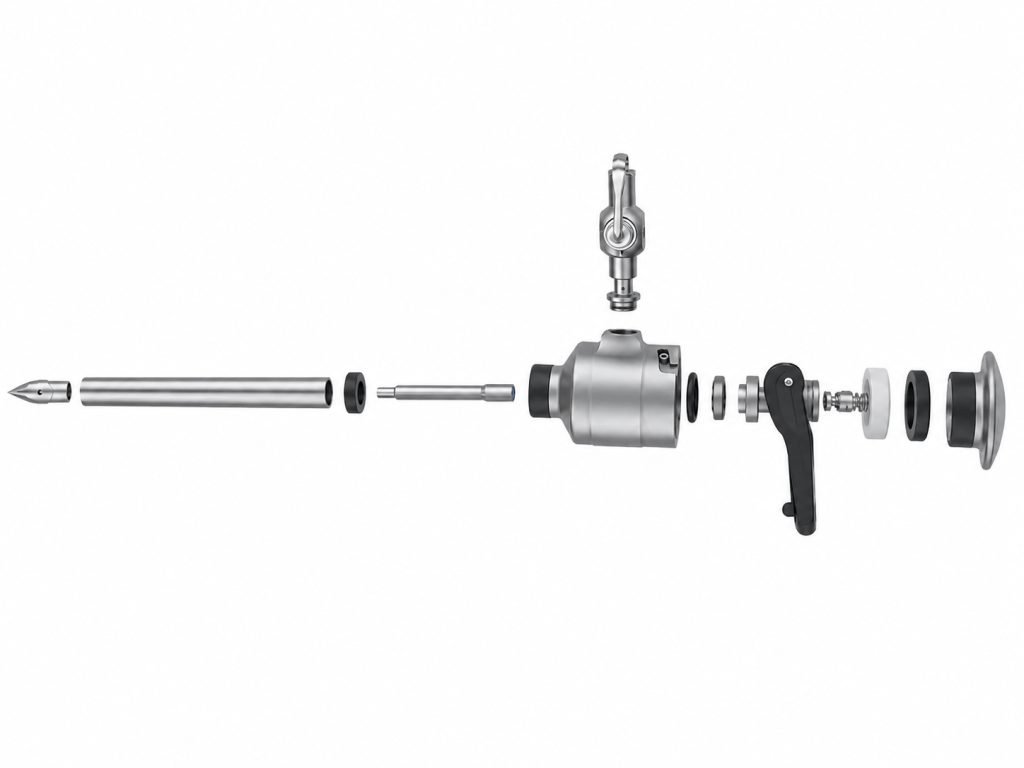 A modern trocar is a complex device incorporating an obturator, valve and sealing system, anti-leakage mechanisms, retention elements and, in the most advanced modular platforms, interchangeable adapters for different diameters. Within this architecture, MIM is particularly competitive for manufacturing small internal components with complex three-dimensional geometries: locks, latches, cams, bushings, valve holders and guiding components.
The practical advantage is twofold: the number of components within the subassembly is reduced, while repeatability of sealing behaviour and trocar friction torque is improved, which is critical for preventing unintended instrument movement either into or out of the body during surgery.
Manual laparoscopic forceps
Jaws, articulation bodies, closing mechanisms such as ratchets, cams and racks, retention teeth and pivots are the areas of a manual forceps where MIM has the greatest impact. The process makes it possible to manufacture fine textures and internal channels with sufficient precision to withstand gripping and cutting loads, while integrating pivot housings, travel stops and contact surfaces within a single component.
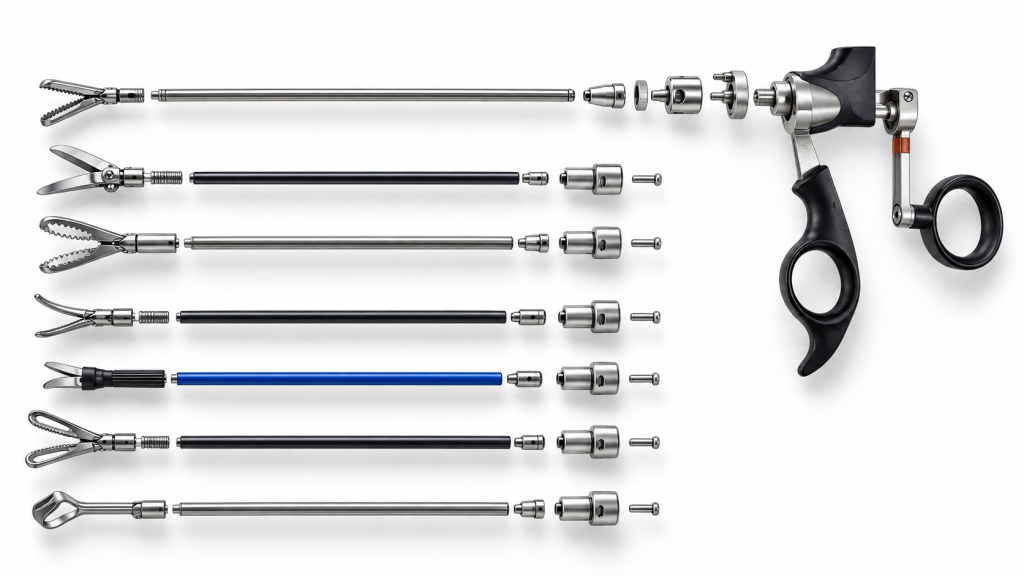 For the manufacturer, this translates into fewer assembly and alignment operations and a significant improvement in the repeatability of the instrument’s tactile response between batches —a factor that surgeons perceive directly.
Robotic forceps, end effectors and multi-DOF wrist systems
In robotic laparoscopy, the challenge becomes even greater: the instrument does not simply open and close, but transmits motion through a long shaft, a wrist system and several degrees of freedom, all while meeting simultaneous requirements for high rigidity, precision, wide range of motion and decoupling between axes.
Here, MIM is particularly competitive for links and kinematic chains, housings containing cables, gears and cams within extremely confined spaces, and locking and coupling elements that ensure precise positioning of the instrument within the robotic arm.
As a result, cumulative tolerances are reduced by replacing multiple machined parts with fewer functionally integrated MIM components, while the kinematic stability of the end effector is improved. Technical literature on wrist mechanisms consistently identifies this as one of the major unresolved challenges in current multi-DOF instruments.
Ball joints and spherical articulations
Ball joints combine complex three-dimensional geometry, tribological contact and the need for smooth movement, both in manual instruments —for tip orientation and force transmission— and in robotic systems, where they form part of the wrist and end-effector coupling. MIM makes it possible to manufacture partial spheres, precision seats, cages and stops with minimum corner radii of around 0.5 mm, reducing stress concentrations and improving durability. Integrated ball-joint subassemblies can also be manufactured, in which the seat, stops and mounting features form a single component, thereby reducing both component count and accumulated backlash.
MIM and robotic surgery: from patent to component
The evolution of robotic surgery towards manipulators with six degrees of freedom —three in the manipulator arm and three in the wrist and end effector— clearly illustrates why MIM has become strategic in this segment. Robotic manipulator architectures described in industry patent literature typically incorporate a set of joints, clamping and locking mechanisms, and a force/torque sensor assembly integrated between the instrument and the final manipulator joint in order to provide haptic feedback to the surgeon.
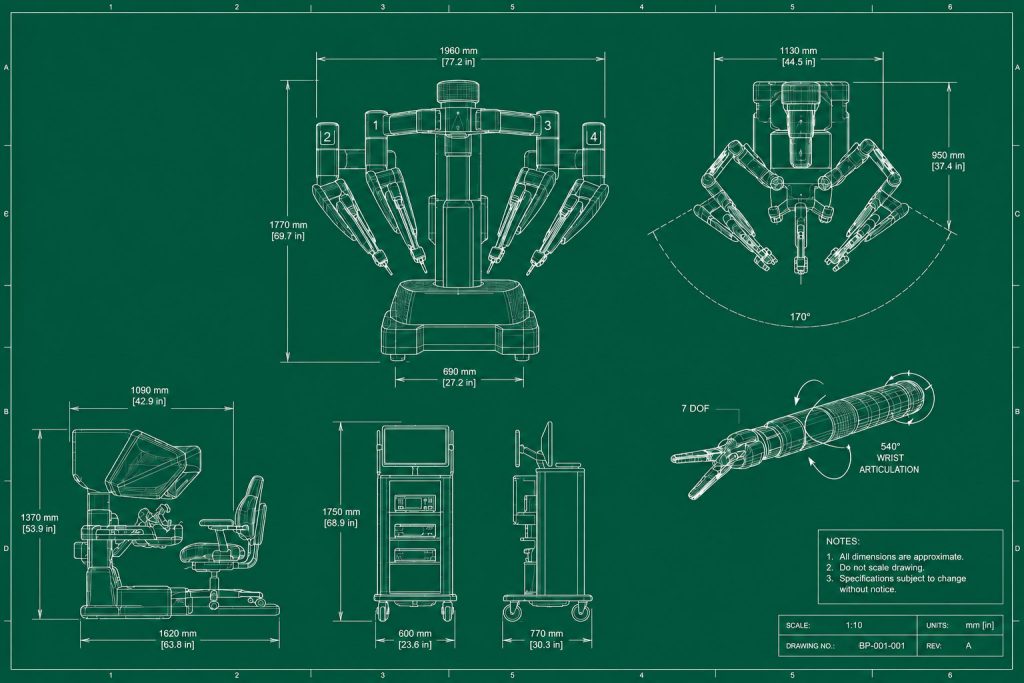 Each of these subsystems shares the same requirement: small, repeatable components that are extremely sensitive to tolerance stack-up. This is precisely the area where MIM demonstrates its distinctive value, allowing these components to be manufactured with high geometric precision while avoiding the dimensional variations introduced by assembling multiple separately machined parts.
Benchmark commercial systems in surgical robotics —from pioneering remote-operation platforms to the latest generations of multi-port and single-port robotic arms— depend on micro-gears, ball-joint pivots and articulation components manufactured to very tight tolerances and with fine surface finishes, precisely the type of component for which MIM offers an optimal balance between geometric complexity, cost and production volume.
The MIM value proposition for OEM manufacturers
From a business perspective, the case for MIM for manufacturers of laparoscopic devices is based on three clearly differentiated pillars.
Value-chain redesign. MIM enables a transition from “many small machined parts” to “fewer functionally integrated parts.” This reduces supply-chain complexity, the number of inventory references and the risk of variability between different suppliers producing parts that must subsequently be assembled and adjusted.
Industrial competitiveness at volume. Once a product programme reaches serial production, the unit cost of complex MIM components can become highly competitive compared with machining or investment casting alternatives thanks to tooling amortisation and production-process automation.
Consistency of clinical performance. In a market where a manufacturer’s reputation depends on the repeated reliability of the instrument in the operating room, MIM’s ability to maintain high process capability indices for critical dimensions translates into lower performance variability between individual units and, ultimately, fewer reported incidents.
Not all components within an instrument benefit equally from the process. A clear distinction should be made between structural elements, wear components and purely kinematic parts, because this distinction determines material selection, surface finishing requirements and the subsequent operations required.
Although MIM delivers value in both manual and robotic instruments, the emphasis changes depending on the final use. In manual instrumentation, the priorities are ergonomics, robustness and total instrument cost; MIM mainly contributes by reducing component count and stabilising instrument behaviour from batch to batch
In robotics, the focus shifts towards kinematics, transmission accuracy and rigidity under external actuation. Here, MIM is particularly valued as an enabling technology for micromechanisms and compact joints capable of maintaining their performance under intensive and repeated actuation cycles.
This distinction is relevant for an OEM designing a product family incorporating both manual and robotic variants: the same manufacturing process can serve both product lines, but their design and validation criteria are not identical.
The future: miniaturisation, minilaparoscopy and new generations of surgical instruments
The trend towards minilaparoscopy —using instruments and trocars with increasingly smaller diameters— further increases the relevance of MIM. Quantitative studies on tissue trauma show that reducing trocar diameter significantly decreases access-related tissue damage, while also improving internal visualisation by reducing the optical shadow cast by the instruments. This miniaturisation is only possible if the manufacturing process itself is capable of producing increasingly small geometries without compromising functional precision or mechanical strength, precisely the area where MIM holds an advantage over conventional manufacturing processes.
At the same time, research into multi-DOF wrist mechanisms for gastrointestinal instrumentation —both manually articulated and robotic— continues to highlight the need to combine high rigidity, a wide range of motion and decoupled degrees of freedom within increasingly compact and lightweight assemblies. Each new generation of wrist mechanism therefore represents, in practical terms, a new application opportunity for MIM components: links, transmission housings, locking elements and precision ball joints.
Why work with Alfa MIMTECH
Our value proposition is based on helping our customers’ engineering teams rethink the design of their critical components in order to make them more compact, more robust and more competitive in terms of total cost, while taking full advantage of the geometric freedom offered by Metal Injection Moulding.
If your team is assessing the feasibility of migrating laparoscopic components —manual or robotic— to a MIM process, or requires a certified supplier capable of scaling from prototype to serial production without compromising dimensional control, at Alfa MIMTECH we can analyse your component and provide an initial technical assessment of its suitability for the process.

