

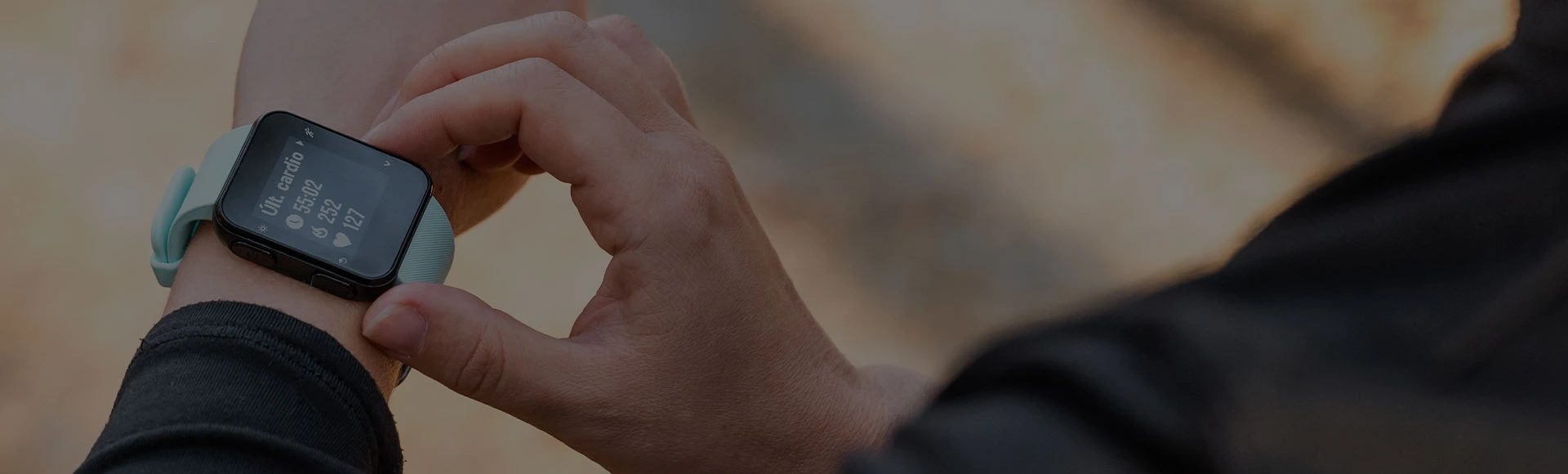

Every time we unlock our smartphone, adjust the volume of our wireless headphones, or check the time on a smartwatch, we are interacting with high-precision metal components that, in all likelihood, have been manufactured using Metal Injection Moulding. MIM — or metal injection moulding — has become one of the most strategic manufacturing technologies for the global electronics industry, and its prominence keeps growing as devices become more compact, more complex, and more mechanically demanding.
At Alfa MIMTECH we are specialists in Metal Injection Moulding for highly demanding markets. Below we will explain in detail how and where MIM is applied in today’s consumer electronics, what advantages it offers compared to other manufacturing technologies, and what the horizon of opportunities looks like for the coming years.
Why is MIM so relevant in electronics?
Metal Injection Moulding (MIM) is a manufacturing process for metal components that combines the design freedom of plastic injection moulding with the mechanical and thermal properties of sintered metals, resulting in metal parts with complex three-dimensional geometries, tolerances in the hundredths of a millimetre, and mechanical properties comparable to those of conventional machining, but produced in medium and high series at a much lower unit cost.
This combination makes MIM the natural answer to one of the great challenges of modern electronic hardware: manufacturing millions of miniaturised parts with shapes that are impossible to obtain by stamping or machining, with consistent dimensional performance and at a competitive price.
The most commonly used materials in MIM for consumer electronics include stainless steels (316L, 17-4PH), titanium alloys, and low-alloy steels, all with excellent corrosion resistance, surface hardness, and aesthetic finishing capability — a critical factor in products that the user sees and touches every day, especially in premium ranges.
Where we find MIM in consumer electronics: current applications
Today, the electronics industry concentrates a very significant fraction of global MIM part production. In markets such as Asia — China is the world’s largest producer and consumer — smartphones account for more than 50% of MIM use in consumer electronics, followed by wearables and audio devices.
Smartphones and tablets: the main driver of Metal Injection Moulding in electronics
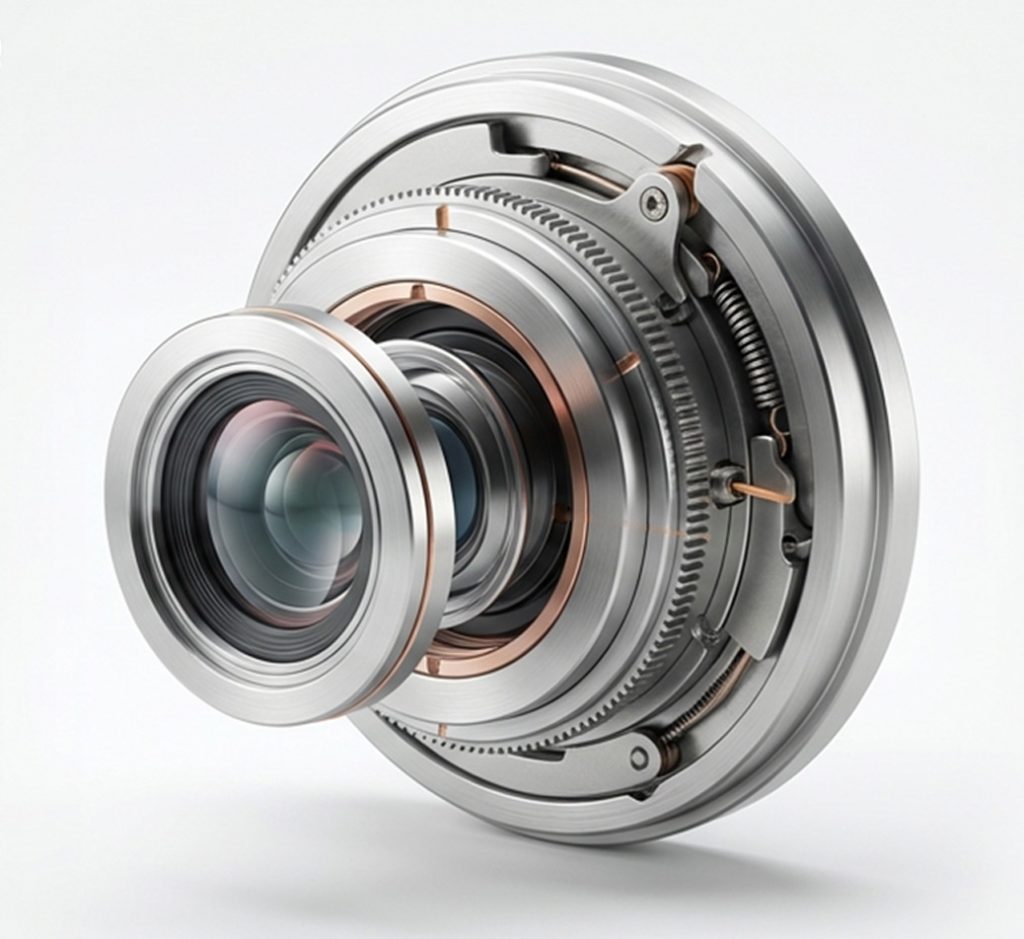 Modern smartphones contain between ten and twenty components manufactured by MIM, located in the areas of greatest mechanical demand in the device. Among the most representative are:
- Metal housings for connectors: the best-known example is the housing of Apple’s Lightning connector, produced by MIM in volumes of millions of units per month. USB-C, docking and proprietary connectors from other manufacturers follow the same pattern, since the internal complexity of these components — guides, shielding contacts, retainers — makes MIM the most efficient solution.
- Frames and supports for camera modules: multi-camera modules with periscope zoom and optical stabilisation require metal structures with very tight dimensional tolerances and high rigidity. MIM makes it possible to manufacture supports with complex internal geometries that ensure optical alignment throughout the product’s service life.
- SIM and microSD trays: these are among the most universal parts in MIM production for smartphones. The combination of ultra-thin profile, ejection mechanism, and aesthetic finish makes them ideal candidates for this process.
- Side buttons (power, volume, mute): smartphone buttons require wear resistance, a premium tactile feel, and precise geometries for the click mechanism. MIM offers all these features with batch-to-batch consistency.
- Hinge components for foldable devices: the hinges of foldable smartphones — such as Samsung’s Galaxy Z Fold or Huawei’s Mate X — are extremely complex mechanical assemblies that integrate barrels, shafts, cams, and locking elements. El Metal Injection Moulding es, junto con el mecanizado de precisión, la tecnología de referencia para producir estas Metal Injection Moulding is, together with precision machining, the reference technology for producing these parts with the level of tolerance and fatigue-cycle resistance required
Wearables and smartwatches: extreme miniaturisation
 The wearables market — smartwatches, fitness trackers, smart rings — imposes some of the most demanding requirements for the manufacturing of metal components: small dimensions, free-form geometries to house antennas and sensors, wear resistance, and high-quality aesthetic finishes. MIM covers this space with advantages that no other technology brings together in the same way.
- Metal cases for smartwatches: manufactured in stainless steel or titanium by MIM, they allow the integration in a single piece of the housing, sealing channels, and strap mounts, reducing the total number of components in the assembly.
- Hinges, clasps, and strap pins: small parts with three-dimensional geometries and very high wear-resistance requirements, which benefit directly from MIM productivity.
- Gears and parts for haptic microactuators: the vibration and haptic feedback mechanisms in wearables incorporate microgears and moving parts that MIM can manufacture with the tolerances needed to ensure quiet and reliable operation.
- Sensor mounts and electromagnetic shielding: MIM allows the manufacture of structures that combine structural and shielding functions in a single part, something highly valued in designs where space is absolutely critical.
Premium audio: when acoustics needs metal
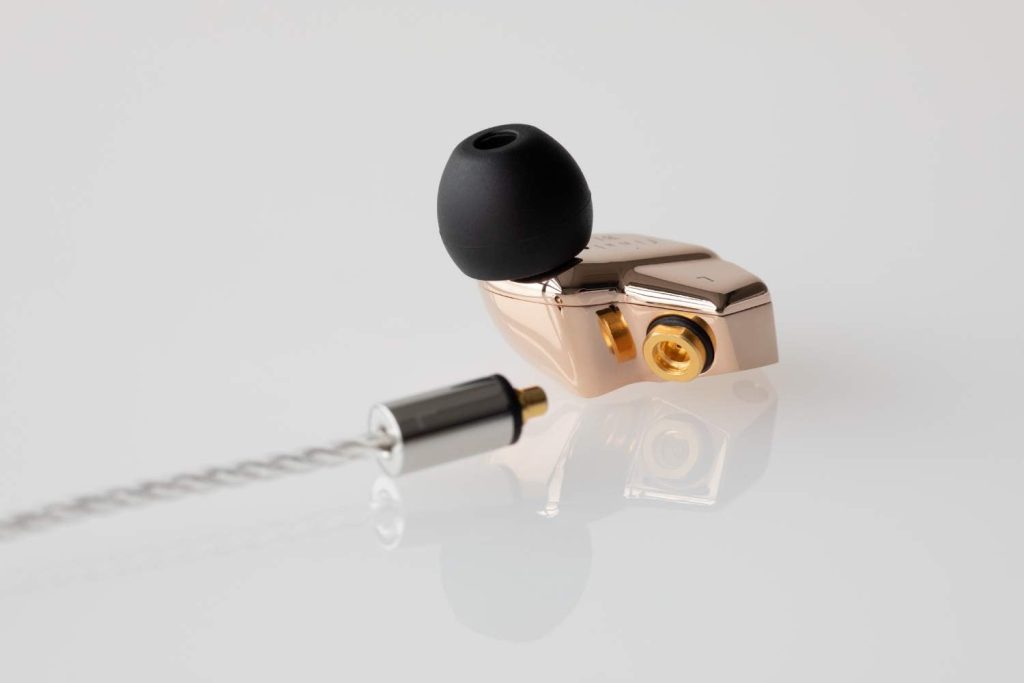 The high-end portable audio segment has found in Metal Injection Moulding an ideal solution for its specific needs. High-end in-ear headphones, such as the Final Audio B1 — manufactured with stainless steel housings produced entirely by MIM — show that this technology is not just a matter of cost: the internal cavities with geometry optimised for acoustics, impossible to obtain by conventional machining, make it possible to fine-tune the frequency response and the sound experience of the product.
- Housings for premium in-ear and true wireless (TWS) earphones: MIM makes it possible to design internal acoustic chambers with channels, diffusers, and pressure-control geometries that improve sound performance.
- Driver retention rings, nozzles, and connectors: small parts that require high dimensional precision to ensure correct assembly and sealing of internal components.
- Metal structures for headphones: headband hinges, extension arms, and adjustment guides manufactured by MIM, as an alternative to machining when geometries are complex and volumes justify the tooling.
Laptops, convertibles, and accessories
The laptop and 2-in-1 device segment uses MIM mainly in two categories: hinges and thermal management.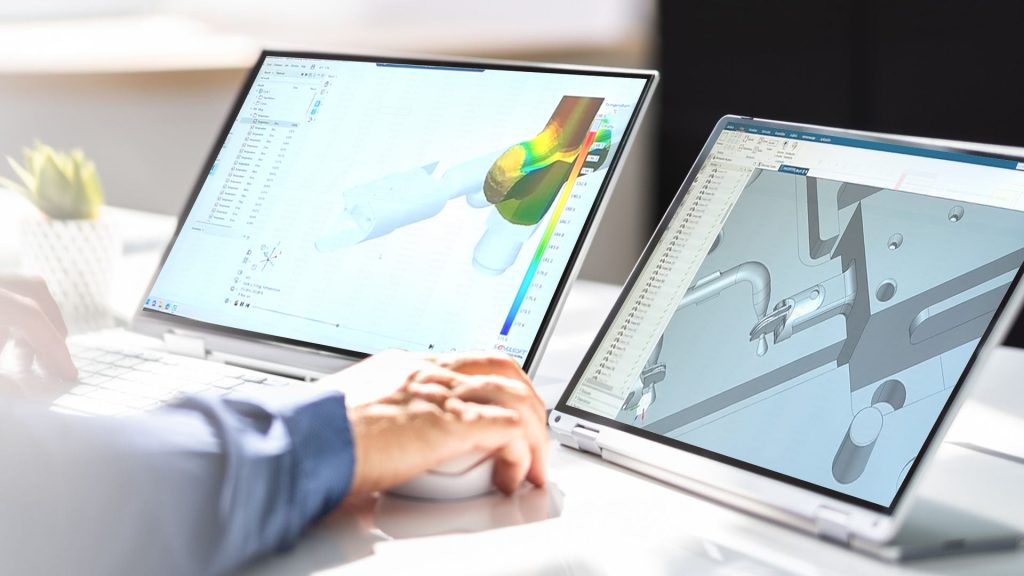
- Hinges for laptops and convertibles: barrels, shafts, and cams that must withstand tens of thousands of opening and closing cycles with constant holding force. MIM, using high-hardness steels, allows these parts to be manufactured with the tolerances required to guarantee quality of use throughout the product’s service life.
- Micro heat spreaders and miniaturised heat sinks: thermal management in ultra-thin devices is one of the major challenges of modern hardware. MIM enables the manufacture of heat sinks with complex internal geometries — flow channels, distribution fins, contact structures — that optimise heat dissipation in connectivity modules and power processors.
- Internal brackets and structural supports: in areas of high stress concentration — such as screen mounts or chassis reinforcements — MIM offers an alternative to machining with tailored geometries and optimised series cost.
Advantages of MIM over alternative technologies in electronics
The adoption of Metal Injection Moulding in consumer electronics is no accident: it responds to concrete, quantifiable advantages over the technologies that compete in the same space.
- Compared to CNC machining: MIM is up to 10 times more cost-efficient for series above 10,000 units, generates no material waste, and allows internal geometries that are inaccessible to cutting tools.
- Compared to metal stamping: MIM is not limited to flat or rotational geometries. It allows complex three-dimensional shapes with integrated functional features (retainers, guides, threads) without additional secondary operations.
- Compared to die casting: MIM works with finer metal powders, which allows higher densities, better surface finish, and tighter tolerances. In addition, MIM is viable for very small parts where die casting cannot compete.
- Compared to additive manufacturing (metal 3D printing): MIM is significantly more productive and cost-competitive for medium and high series, while maintaining mechanical properties superior to those of most additive processes.
For consumer electronics, where millions of identical parts with tolerances in the hundredths of a millimetre are needed, MIM occupies a technological space that no other solution can fully cover.
Trends and future applications of MIM in electronics
The medium-term outlook for Metal Injection Moulding in consumer electronics is shaped by several converging trends that significantly expand the potential of this technology
Foldable and rollable devices: the next frontier
The proliferation of foldable smartphones, tablets, and laptops — and, on the horizon, rollable devices — multiplies the demand for mechanically sophisticated hinge assemblies. These mechanisms, which must withstand hundreds of thousands of cycles with precise holding forces and assembly tolerances of a few microns, are one of the major growth drivers for MIM in the next five years. MIM’s ability to produce parts with complex geometries in high-hardness materials — including titanium — positions it as the reference technology for this generation of products.
Micro-MIM and next-generation wearables
Smart rings, near-invisible hearables, and body-worn sensors represent the frontier of miniaturisation in wearables. To manufacture the metal components of these devices — often with dimensions below 10 mm — micro-MIM (μ-MIM) is being developed, a variant of the process that uses even finer powders and higher-precision moulds. This specialisation opens up a high value-added segment with few competing technological alternatives.
Thermal integration and heat management
Portable gaming devices, virtual reality docks, and intensive monitoring wearables create thermal challenges that require next-generation dissipation solutions. MIM makes it possible to manufacture micro thermal-exchange structures with optimised internal flow geometries, integrating in a single metal part functions that today require multiple components and processes.
Sustainability and circularity
The global trend towards more durable, repairable electronic products with lower environmental impact encourages the replacement of plastic components with metal ones in areas of high mechanical demand. MIM, with its ability to use nearly 100% of the material and to manufacture with recyclable alloys, fits perfectly with the sustainable design criteria that will shape the next decade in the electronics industry.
Alfa MIMTECH: your European MIM partner for consumer electronics
In a market where the production of MIM parts for electronics is highly concentrated in Asian suppliers, Alfa MIMTECH offers a differentiated value alternative for manufacturers and designers seeking certified quality, intellectual property protection, stable supply chains, and proximity for product co-development.
Our technical capability ranges from design for MIM (DfMIM) to series production of high-precision components in stainless steels, tool steels, and special alloys We work with customers across the entire value chain: from Tier-1 component suppliers to OEMs looking to reduce their dependence on other suppliers without sacrificing quality or cost competitiveness.
If you are developing an electronic device with highly complex metal components, or if you need to assess whether MIM can improve the performance or cost of a part in production, contact our engineering team. At Alfa MIMTECH we combine the technical experience of Metal Injection Moulding with market knowledge to offer you real solutions, not just production capacity.


